


EUDR: The Sustainable Future of Brazilian Coffee Farming and the Role of CollaborativeInitiatives


The European Regulation on Deforestation-Free Products (EUDR) is redefining the landscape of global agricultural commodity trade. With implementation scheduled for December 2025 for large companies and June 2026 for small and medium-sized enterprises, this legislation goes far beyond simply prohibiting products from deforested areas after December 2020. The EUDR requires complete traceability of the production chain, compliance with human and labor rights, and respect for the rights of indigenous peoples, establishing a new sustainability standard for the European market.
For Brazil, the world's largest coffee producer and responsible for almost half of the exports destined for the European Union, the EUDR represents both a challenge and a transformative opportunity. The Brazilian coffee sector, which handles around 69.9 million bags annually, needs to quickly adapt to the new traceability and sustainability requirements. The European Union, which represents 47.3% of Brazilian coffee exports between January and July 2024, is becoming an even more strategic and demanding market.
Recognizing the importance of this transition, the Coffee Exporters Council of Brazil (Cecafé) launched a pioneering initiative with a landing page dedicated to the EUDR and Brazilian coffee.
This digital platform aims to facilitate the understanding of the new rules and their impacts on Brazilian coffee trade, offering questions and answers directed at producers, exporters, and importers. More than 50 exporting companies and cooperatives are already applying advanced technologies to assess and generate evidence on the compliance of beans destined for the European bloc.
The Cecafé pilot project represents a milestone in the sector's preparation for the EUDR. In partnership with Serasa Experian, thru the Smart ESG platform, Brazilian exporters can verify and monitor socio-environmental information of rural properties, including the identification of those that meet the requirements of European regulation and the extraction of geolocation data.
This initiative covers almost all coffee shipments destined for the European Union, demonstrating the sector's commitment to regulatory compliance. The EUDR establishes three fundamental criteria that products must meet: being deforestation-free, being produced in accordance with the relevant laws of the country of production, and being covered by a due diligence declaration. Companies must implement robust systems that collect detailed information, assess non-compliance risks, and take appropriate measures to mitigate any risk that is more than "negligible." The European Commission's benchmarking system will classify countries into low, standard, or high-risk categories, influencing the necessary due diligence requirements.
In addition to environmental aspects, the EUDR incorporates significant social dimensions. The regulation requires compliance with human rights protected by international law, labor rights, land use rights, and specifically the principle of Free, Prior, and Informed Consent (FPIC) for indigenous peoples. These requirements reflect a holistic approach to sustainability that goes beyond environmental conservation to encompass social justice and the protection of vulnerable communities.
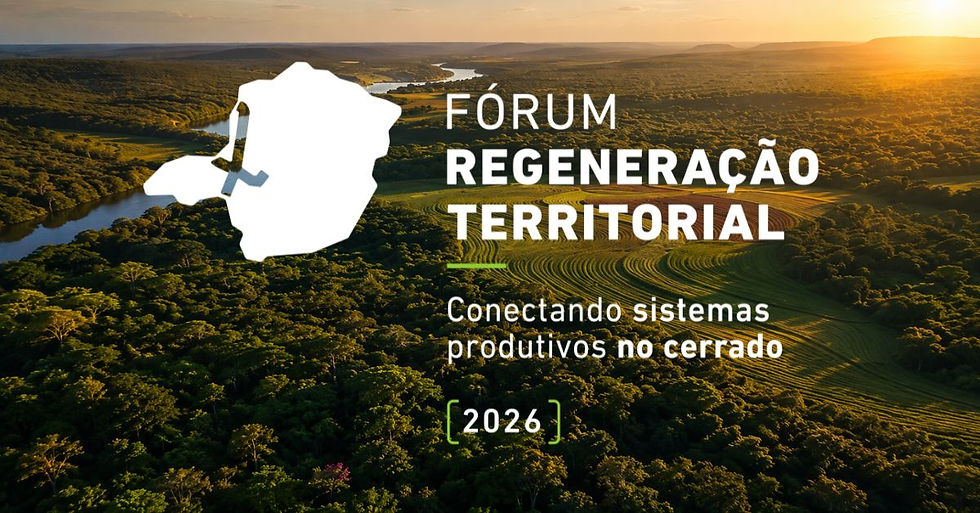
It is in this challenging context that multi-stakeholder collaborative initiatives, such as the Cerrado das Águas Consortium, demonstrate their strategic value. Created in 2015, this model brings together companies, government, and civil society in a collaborative platform focused on climate- smart agriculture. Thru practices such as ecological restoration, efficient water resource management, and the implementation of sustainable production techniques, these initiatives anticipate many of the EUDR requirements, providing producers with practical tools for compliance.
Climate-smart agriculture emerges as a fundamental response to the challenges imposed by the EUDR. This concept is based on three interconnected pillars: increasing productivity sustainably, adapting to climate change by creating resilience in production systems, and mitigating greenhouse gas emissions. Practices such as conservation agriculture, integrated crop-livestock-forest systems, the use of precision technologies, and sustainable natural resource management not only meet regulatory requirements but also enhance the competitiveness and economic sustainability of properties.
The implementation of the EUDR requires significant investments in technology and training.
Geolocation systems, digital traceability platforms, precision agriculture, and technologies such as the Internet of Things, satellites, and artificial intelligence become essential to optimize the production chain and ensure compliance. The development of digital certification and blockchain-based systems promises to revolutionize the transparency and reliability of information throughout the entire supply chain.
For small and medium producers, who often face greater difficulties in adapting to new requirements, public-private partnerships and collaborative initiatives are fundamental. Technical training programs, facilitation of access to financial resources, and ongoing technical assistance become essential to ensure that the entire production chain can adapt to the new standards. The experience of initiatives like the Cerrado das Águas Consortium demonstrates that the union between different actors in the production chain multiplies results and reduces individual adaptation costs.
The Cerrado, responsible for 40% of the water production that supplies Brazil and concentrating 12% of the national coffee production, exemplifies the strategic importance of ecological restoration for the compliance with the EUDR. Projects for the restoration of native vegetation are not just environmental requirements, but fundamental economic strategies to ensure the water and climate sustainability necessary for maintaining agricultural productivity in the long term.
The EUDR is not an isolated regulation, but part of a European regulatory ecosystem that includes other corporate sustainability directives such as the Corporate Sustainability Reporting Directive (CSRD) and the Corporate Sustainability Due Diligence Directive (CSDDD). Companies that anticipate these requirements thru robust sustainability programs will have significant competitive advantages, including easier access to the European market, the possibility of obtaining premium prices for certified products, and stronger and more lasting business relationships.
The Brazilian response to the EUDR, exemplified by the efforts of Cecafé and collaborative initiatives such as the Cerrado das Águas Consortium, demonstrates that the country is positioned to lead globally in sustainable coffee production. Brazil has cutting-edge technology for agribusiness, consolidated experience in sustainable tropical agriculture, and proven capacity for innovation in climate-smart practices. The convergence between regulatory requirements and sustainable practices offers a historic opportunity to position the country as a global reference in responsible agriculture.
The future of Brazilian coffee cultivation is being built today thru the combination of ambitious regulations like the EUDR and proactive initiatives from the sector. This transformation not only represents compliance with international requirements but also the construction of an agricultural development model that reconciles productivity, profitability, and environmental and social responsibility. The success of this transition will depend on the ability to coordinate between different actors in the production chain, investment in technology and training, and commitment to practices that ensure the preservation of natural resources for future generations, establishing a lasting legacy of sustainability and innovation in Brazilian agribusiness.



Comments